
Photography at Fanal: The Complete Guide
This article is part of the Complete Guide to Photography in Madeira

Fanal Forest is one of the most distinctive photography locations in Madeira, and images from this ancient laurel woodland look different from almost anywhere else on the island. Photographs from Fanal are instantly recognisable, but working among the trees in the fog is just as memorable as the pictures themselves. It’s my favourite place to return to in Madeira, and I often intend to stop for a short time before getting absorbed in making images for hours.
This guide explains how to photograph Fanal, including the best conditions, possible subjects, composition among the trees, what gear to bring, and how to plan a visit as part of a wider Madeira photography trip.
Photography Guide
Travel Guide

Photographing Fanal Forest: On Location
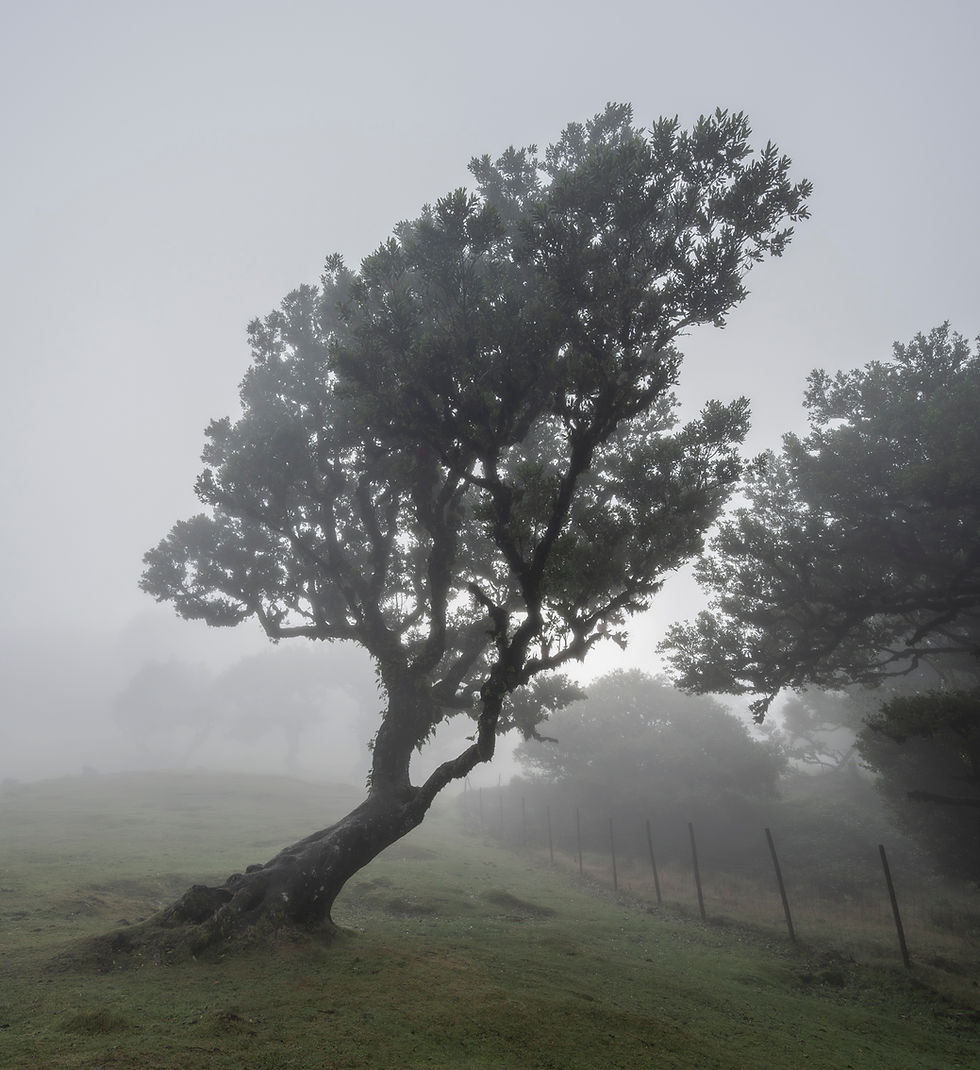
Fanal is so well known that it’s easy to imagine a vast forest with endless subjects, but the main photography area is surprisingly compact. You can walk across the open centre in less than fifteen minutes, and it feels more like a field scattered with trees than dense woodland. Cows wander across the landscape and occasionally into your compositions, and the open space looks incredible when fog rolls in and separates the trees from the background.
There are miles of denser forest surrounding Fanal, and you can extend your time here with a hike through the ancient Laurisilva of Madeira’s north coast. However, you don’t have to walk far to capture the classic scenes of trees emerging from the fog, and most photographs are made in the centre, a short distance from the parking area.
This easy access means Fanal can be busy, and there are increasing restrictions on movement around the trees, along with fences and access fees for hiking trails into the wider forest. However, this guide contains advice on the logistics of your visit to Fanal and how to get the most from the experience.
Conditions for Photography at Fanal

Photographers come to Fanal hoping for fog. Shapes and patterns in the trees can be interesting in clear weather, but mist transforms the place and makes it much easier to simplify the complex arrangements you find in any woodland. When the fog is thick enough, the centre of Fanal becomes a clear white canvas, with trees emerging from the background as you walk.
Fog formation at Fanal is an unusual process. Moist air from the Atlantic is pushed up by the steep terrain and condenses as it reaches the cooler air at higher elevations. This means Fanal can be covered in mist even when the coast below is clear, but it also makes the fog difficult to forecast. Even if you can see cloud nearby, a small change in elevation, wind or cloud height can decide whether the mist sits among the trees or passes above them.
The best approach to finding fog at Fanal is to visit early in the morning and arrange your schedule so you can return on multiple days. Three separate visits will give you a much better chance of seeing fog, especially in spring or autumn, when the mornings can be cooler.
Fanal is still interesting on a clear day, but it’s harder to form compositions and capture the unique atmosphere that makes this location so famous. If you arrive in clear conditions, treat the visit as a scouting session: learn the layout, look for distinctive trees, and return when cloud is sitting higher in the mountains.
Best Time of Day to Photograph Fanal

If your goal is to capture fog at Fanal, timing your visit is mostly about maximising your chances, rather than planning around the quality of light. The second consideration is visitor numbers, and finding the quietest time to arrive.
Fog is slightly more likely in the mornings, and photography is much easier when there is some light. That makes the optimum time for Fanal as early as possible after the sun has crossed the horizon, before most visitors begin arriving around 9am. By 10am, it can get much busier as people arrive from across Madeira to visit the forest.
I don’t recommend Fanal for sunrise or sunset; it has no clear sight lines to the horizon for light on a clear day, and the forest can be very dark in the fog without enough ambient light from the sun. The best approach is to capture sunrise at a nearby location like Ribeira da Janela, then leave immediately afterwards to check on Fanal as the light increases.
If your best opportunity to visit Fanal is in the middle of the day, the central area may be busy, but you can usually find more space and flexibility in the thicker forests around the edges. Composing images in dense woodland is more challenging, and you won’t get many of Fanal’s distinctive tree portraits, but the atmosphere can still be excellent, and these areas may give you more original photographs.
How to Photograph Fanal Forest

Fanal works best when you move slowly, watch carefully and give yourself time to understand the trees. It is not a location where you need to find one viewpoint and wait for the light.
The trees change shape as you move around them, and the same subject can appear completely different from another angle. It’s worth considering whole trees, smaller patterns, and the way branches overlap, separate and interact with the fog, especially towards the denser edges.
Although it’s important to move, don’t chase the fog. By the time you walk across Fanal to thicker mist, it may have moved somewhere else, including back to the place you just left. On days when the fog is light and patchy, watch the wind to see if it is moving consistently, and try to find a position where it will come to you.
Camera Gear for Fanal Photography

Fanal is easy to access, but you may still spend several hours walking through damp conditions with your gear on your back. Even if you don’t plan a long hike, think carefully about what you can remove from the pack before setting out.
Most of the images in this guide were taken around 14mm–24mm, and wider focal lengths work well for photographing whole trees in their surroundings. A longer lens can be useful for picking out details in the branches, especially around the denser edges of the forest, but you don’t need to carry every lens if you want to keep the visit light and flexible.
I rarely want a heavy setup at Fanal. A tripod can help in very dark fog, but it also slows down the small movements that make compositions work. If there is enough light to shoot handheld, I prefer to stay mobile.
To deal with the rain and fog, bring plenty of lens cloths and a waterproof cover for your bag.
Getting to Fanal Forest

Fanal is in the northwest of Madeira, in the mountains between Seixal and Ribeira da Janela. The main road through Fanal links the north coast with the higher plateau around Paúl da Serra, making it easy to combine with other places in the northwest of the island.
Parking at Fanal is free and easy to find beside the main route through the area, especially early in the day. There is a public toilet nearby, and it’s only a short walk through the trees from the parking area to the open centre of Fanal.
There is no useful public bus connection to Fanal, so the best way to visit is with your own rental car. The road is not especially difficult by Madeira standards, but it can be wet, foggy and slow just as the conditions are best for photography.
There is no entrance fee or timed entry requirement for visiting the central Fanal area around the road and parking. However, some classified walking routes connected to this area, including official PR trails, may require a paid reservation through SIMplifica, in line with other managed trails in Madeira.
Where to Stay for Fanal Forest

For the best chance of catching fog at Fanal, it helps to stay nearby and visit several times over the course of your trip. Madeira is small enough that you can reach Fanal from almost anywhere, but the northwest has enough great photography locations to work well as a base rather than just a day trip.
Porto Moniz has the best balance of nearby accommodation, restaurants and access to Fanal, and the drive usually takes under 25 minutes. Ribeira da Janela is the closest village, but there are fewer places to stay, and the shorter drive matters less because Fanal is rarely a location where you need to arrive for the exact moment of sunrise.
For a more flexible option with easier access to the rest of the island, São Vicente is only around 35 minutes from Fanal, with much better connections to the south and east. If you only want one base on Madeira, São Vicente is one of the most flexible options for photography.
How Long to Spend at Fanal Forest

Fanal is compact, and it’s possible to walk around most of the central area in under 30 minutes. However, once you factor in time to compose images, return to promising trees and wait for the fog to change, it’s very easy to spend two or three hours.
I recommend allowing at least an hour and a half if you find fog at Fanal, but a more productive visit will often last closer to two and a half hours. The extra time gives you a chance to walk the same ground more than once, notice how the trees change from different angles, and wait for the mist to isolate subjects more effectively.
If you add the nearby trails and denser woodland, you could easily turn Fanal into a half-day or full-day session. Beyond that, the decision depends mostly on how much you enjoy slow woodland photography. Fanal can keep producing new ideas, but only if you enjoy wandering, repeating loops, and refining your compositions as conditions change.
Protecting Fanal Forest

Fanal is ancient and fragile, and it has become a globally recognised destination as images of its fog-covered trees have spread online. The tourist industry in Madeira is experienced with managing visitor demand in natural places, but Fanal continues to grow in popularity.
There are now fences along some of the trails through the main area of trees, with clear guidance about staying on established routes and avoiding damage to this fragile place. Drone photography is restricted in this protected landscape, and there is always the possibility of new limits or access changes as visitor numbers increase.
Currently, an early morning visit will give you a quieter photography experience, with fewer people in your compositions and more time to work within the marked routes. However, some compositions you find online may no longer be possible, and the best approach is to use those limitations as a reason to look for more creative options.
Nearby Photography Locations

The nearest photography location to Fanal is the beach and sea stacks at Ribeira da Janela, which makes a great companion spot at sunrise before you head up to check the fog. The microclimates in this area mean you can often find clear sky on the coast and thick fog above at Fanal at the same time.
The northwest coast between Porto Moniz and São Vicente is packed with other opportunities, and you can drop back down to work through a series of viewpoints, beaches and cliffside stops when you have finished at Fanal. Porto Moniz, Seixal, Véu da Noiva and São Vicente all fit naturally into the same north-coast route, making Fanal easier to treat as a flexible stop rather than a single isolated destination.
If you are crossing the plateau rather than returning to the north coast, you can also continue south towards the popular forest walks around 25 Fontes and Risco Waterfall. This area is very busy during the day, and the challenge is timing: 25 Fontes is also best early, which may conflict with a fog attempt at Fanal. It can be easier to visit later in the afternoon, after the busiest period has passed.
Final Thoughts

Fanal is compact, but its possibilities gradually reveal themselves over time. Each slow loop uncovers new potential compositions, and the shifting fog changes which angles work as trees appear before disappearing back into the mist.
You can make a relatively quick stop at Fanal if you are limited by your itinerary, but this is a place that rewards a slower approach. Extending your walks into the surrounding forest can help you find new scenes to shoot, while repeated visits give you a much better chance of experiencing the best conditions and coming away with stronger images.

About the Author

I’m Kevin Read, a photographer and travel writer creating practical resources for photographers planning their own trips. My guidebooks and articles are based on first-hand location research and photography, with advice on light, conditions and travel planning. I also publish a free monthly photography and travel magazine called In The Frame.
Comments