
Best Time to Visit Madeira for Photography
This article is part of the Complete Guide to Photography in Madeira

Madeira is an incredibly flexible place for a photography trip, and there’s no perfect season to visit. The island’s isolated position in the ocean produces constantly changing weather, while its dramatic terrain creates microclimates and huge local variation. Whatever season you choose, conditions will vary across the island.
However, you can still time your visit around changes in water levels, visitor numbers, and your chances of experiencing weather phenomena like fog and cloud inversions. Madeira doesn’t change through the seasons in the same way as higher-latitude destinations, but it does shift enough that it’s worth thinking carefully about your priorities.
This article will help you choose the timing of your Madeira photography trip, including what stays consistent, what changes, and how those factors affect when to go.
Contents

Consistency and Weather Patterns
While Madeira’s weather can be famously disruptive, there are some consistent patterns that become clear when you spend time on the island. These are the factors that make Madeira such a flexible destination for photography, and when planning a trip, they matter almost as much as the seasonal differences.

Day Length and Sunrise Timing
Madeira sits at roughly 32.6 degrees north, so day length does not vary dramatically across the year. You’ll get around 10 to 14 hours of daylight whenever you visit, which means there is always plenty of time to be out with the camera.
Local sunrise times on Madeira range only from about 7am to 8.10am, and much of that variation is offset by Daylight Saving Time. That makes it relatively easy to be on location for the early stages of twilight, even at the height of summer.
The North-South Divide
At any time of year, you’ll generally find wetter, moodier conditions on the north coast and calmer, sunnier weather in the south. This pattern is reflected in the island’s agriculture and infrastructure, including the irrigation channels that carry water towards the drier land in the south.
It is not a rule that overrides the forecast on any given day, but it is one of the clearest patterns on the island and can affect your photography more than the season alone.
Microclimates
Madeira rises straight from the ocean, with steep cliffs and deep valleys separating different parts of the island. This terrain creates strong microclimates, and moving from one area to another can mean stepping into very different conditions.
Because Madeira is compact and full of interesting places to photograph, it is often possible to react to the weather and improve your chances of finding good conditions by changing location. These microclimates are one of the main reasons Madeira remains such a flexible photography destination throughout the year.
Seasonal Changes in Madeira
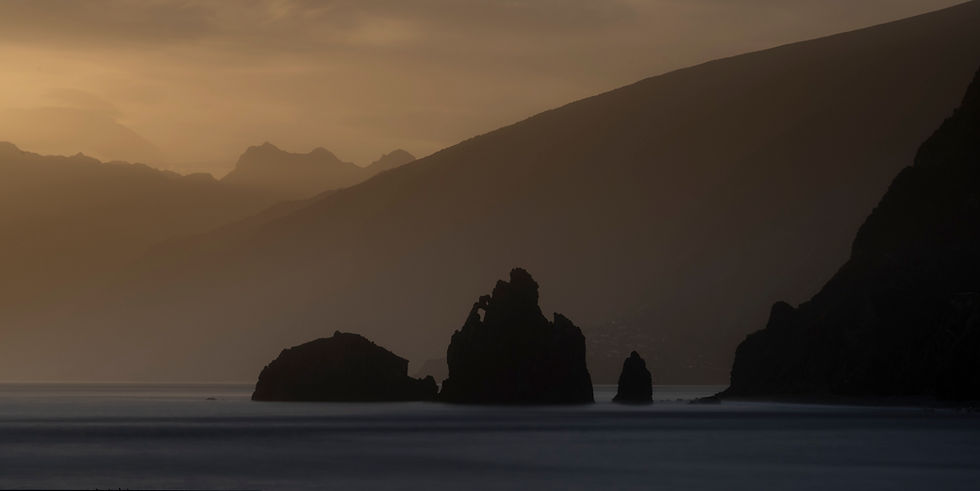
Madeira’s consistency is one of its strengths, but if you can choose when to visit, there are still some important seasonal differences to think about. These changes affect everything from the colour of the landscape to the busyness of the trails, and some will matter more than others depending on the kind of photography you want to prioritise.
Landscape Colour and Waterfalls
Madeira’s temperatures remain fairly moderate throughout the year, but rainfall changes
much more noticeably. Summers are dry, while rainfall peaks through the winter months, especially from November to January.
The most vibrant period is from winter into spring, when waterfalls are full and the island’s foliage turns vivid shades of green. By the end of summer, waterfalls are often smaller, or dry completely, and parts of the landscape take on more yellow and brown tones.
Fog, Cloud Inversions and Atlantic Weather
Some of the most iconic images from Madeira depend on specific atmospheric conditions, especially fog and cloud inversions. These can happen at any time of year, but are slightly more likely between May and September, when warmer weather can help the cloud settle at higher elevations.
Autumn and winter also bring more dramatic Atlantic weather, with bigger ocean swells and moodier conditions along the coast. These conditions are ideal for photography on the rugged north coast.
Crowds and Logistics
Madeira is a popular holiday destination, and visitor numbers broadly follow the demand pattern of many European destinations. Summer is the busiest period, with an additional spike around Easter, while January to March are usually much quieter months to visit.
During peak periods, it’s more difficult to park at trailheads, accommodation is often more limited and expensive, and well-known viewpoints feel much busier. Sunrise is still usually quiet, but you will notice more people across the island during the main travel seasons.
Madeira by Season: Quick Guide

The seasonal variation in Madeira affects some features more than others, so your priorities will determine how much the season matters. In towns and around the coast, it’s harder to notice the effects of the changing seasons. In the forests, rainfall can impact the colour and state of the trails. This section explores each season in Madeira, with the main considerations for photographers.
Winter (December–February)
Atmosphere: Green landscapes, full waterfalls, and a wilder, more dramatic coast
Weather: The wettest season, though still relatively mild at 15–20°C / 59–68°F
Logistics: The quietest time of year, with easier parking and fewer crowds
Best for: Moody coastal photography and lush forest scenes
Spring (March–May)
Atmosphere: A reliable all-round season with a fresh landscape and varied conditions
Weather: Milder temperatures, improving trail access, and a slightly better chance of fog and cloud inversions
Logistics: Still fairly manageable, though busier around Easter
Best for: Photographers who want a balance of greenery, waterfalls, and mountain access. It’s a great time for anyone planning a first trip.
Summer (June–August)
Atmosphere: The most reliable season for hiking, with drier landscapes away from the north coast
Weather: Warm, dry conditions at 23–25°C / 73–77°F, with good chances of fog and cloud inversions
Logistics: The busiest time of year, with more pressure on trailhead parking and accommodation
Best for: Mountain access, longer hikes, and atmospheric conditions in the forests and high ground
Autumn (September–November)
Atmosphere: A balanced season with fewer crowds than summer and occasional bursts of dramatic weather
Weather: Mild temperatures at 18–24°C / 64–75°F, with dry landscapes gradually changing after the first rains
Logistics: Easier than summer, though conditions are a little less predictable than spring
Best for: Photographers who want good access with a bit more atmosphere and fewer people
My Recommendations
The exact timing of your Madeira photography trip won’t make as much difference as it would in more variable destinations. However, if you can choose any time of year to visit, the best season depends on your kind of photography. Below are the most common priorities for photographers, and my recommendation for each.
Quietest trip: winter, especially January to March
Green landscapes and fuller waterfalls: late winter into spring
Fog and cloud inversions: late spring into summer
Dramatic coastal weather: autumn and winter
Easiest hiking access: summer
Best all-round balance: spring
Conclusion

For most photographers planning a first trip to Madeira, I would choose spring if you have the flexibility. It gives you the best overall balance of greenery, active waterfalls, manageable crowds and good access to the mountains. However, Madeira is flexible enough to work in any season, and the best time to visit depends less on finding a perfect month than on matching the trip to the kind of images you want to make.

About the Author

I’m Kevin Read, a photographer and travel writer creating practical resources for photographers planning their own trips. My guidebooks and articles are based on first-hand location research and photography, with advice on light, conditions and travel planning. I also publish a free monthly photography and travel magazine called In The Frame.
Comments